Water Heater Repair vs. Replacement: Compare Your Options Before Hiring
Water heater repair usually fits a contained, safe failure, while replacement makes more sense when the unit has repeated problems, serious damage, or poor fit. At PlumbingMaplevalley.com, we check the heater, explain the trade-offs, and prepare a quote for the needed repair or installation.
Request an EstimateWater Heater Repair vs. Replacement at a Glance
Water heater repair suits a sound tank with a contained component failure. Water heater replacement suits a damaged unit, poor capacity match, or repeated failure pattern.
Our comparison looks at safety, maintenance, installation work, and household hot water demand. We use these factors before preparing a repair quote or replacement quote.
- Water heater repair fits a contained failure when the tank remains sound.
- Water heater replacement fits corrosion, major leaks, repeated failures, or a poor system match.
| Factor | Water Heater Repair | Water Heater Replacement |
|---|---|---|
| Cost drivers | Failed part, access, drainage, and labor scope | Unit choice, removal, connections, safety parts, and installation scope |
| Installation timeline | Usually involves focused service work | Requires equipment planning and installation work |
| Maintenance | Keeps the existing system in service | Begins a new maintenance cycle |
| Best fit | Contained, safe failures | Tank damage, poor capacity, or recurring problems |
When Water Heater Repair Makes Sense
Water heater repair makes sense when the failure is contained, the tank remains sound, and the repair restores safe operation.
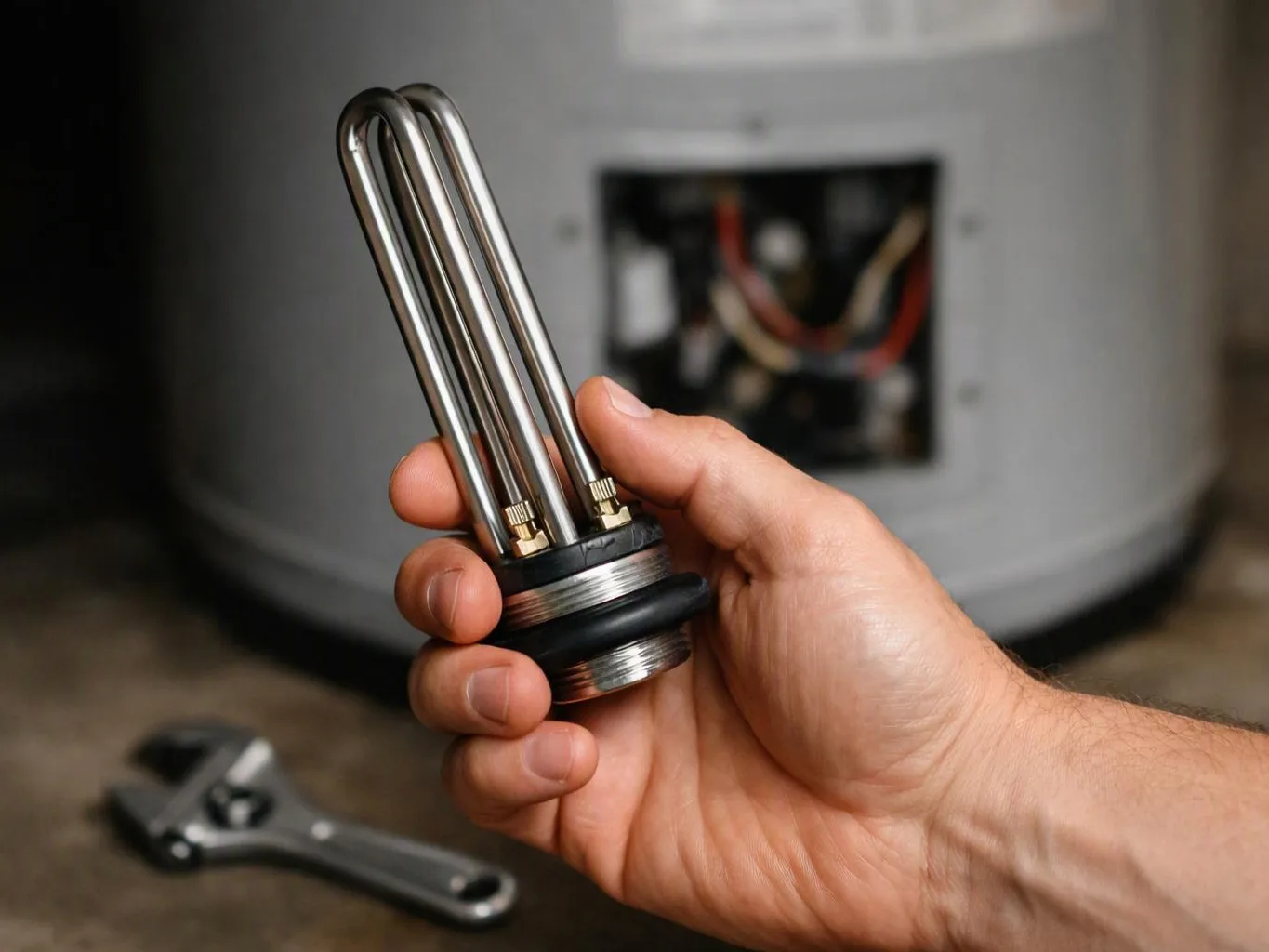
A contained leak may come from a connection, drain valve, or pressure relief valve. We also check the thermostat, heating element, gas control valve, electrical connection, and burner.
Water heater age helps guide the decision, but age alone doesn't decide it. Our repair estimate considers the tank condition, failure pattern, safety risks, and expected maintenance needs.
We can explain the repair path through our Water Heater Repair service when the existing system remains a sound fit.
Advantages of Repairing Your Water Heater
Repairing a sound water heater focuses work on the failed part. That approach can suit short-term service needs and preserve maintenance continuity.
Our team confirms that the repair supports safe operation before we recommend keeping the system in service.
Best for: a sound water heater with a contained failure and a reasonable repair scope.
When Water Heater Replacement Makes Sense
Water heater replacement makes sense when the tank is damaged, failures keep returning, or the existing unit no longer fits the home.
Tank corrosion, rust, and a major leak can signal damage inside the water heater tank. Water damage around the unit also raises the need for a careful replacement review.
Obsolete components may make repair harder or less practical. Capacity, energy use, fuel type, and code compliance also matter when household demand has changed.
Replacement can provide a better fit when the current unit produces no hot water or inconsistent hot water. We compare the repair scope with the replacement scope before recommending an installation.
Advantages of Replacing Your Water Heater
Replacing a damaged or poorly matched water heater creates a new starting point for system planning. The right choice still depends on fuel supply, electrical service, venting, and household demand.
Our team checks installation compatibility before selecting a new unit.
Best for: a water heater with tank damage, recurring failures, poor capacity, or unsafe installation conditions.
What We Check Before Recommending Repair or Replacement
Our water heater inspection checks the failure source, system condition, safety controls, and installation requirements.
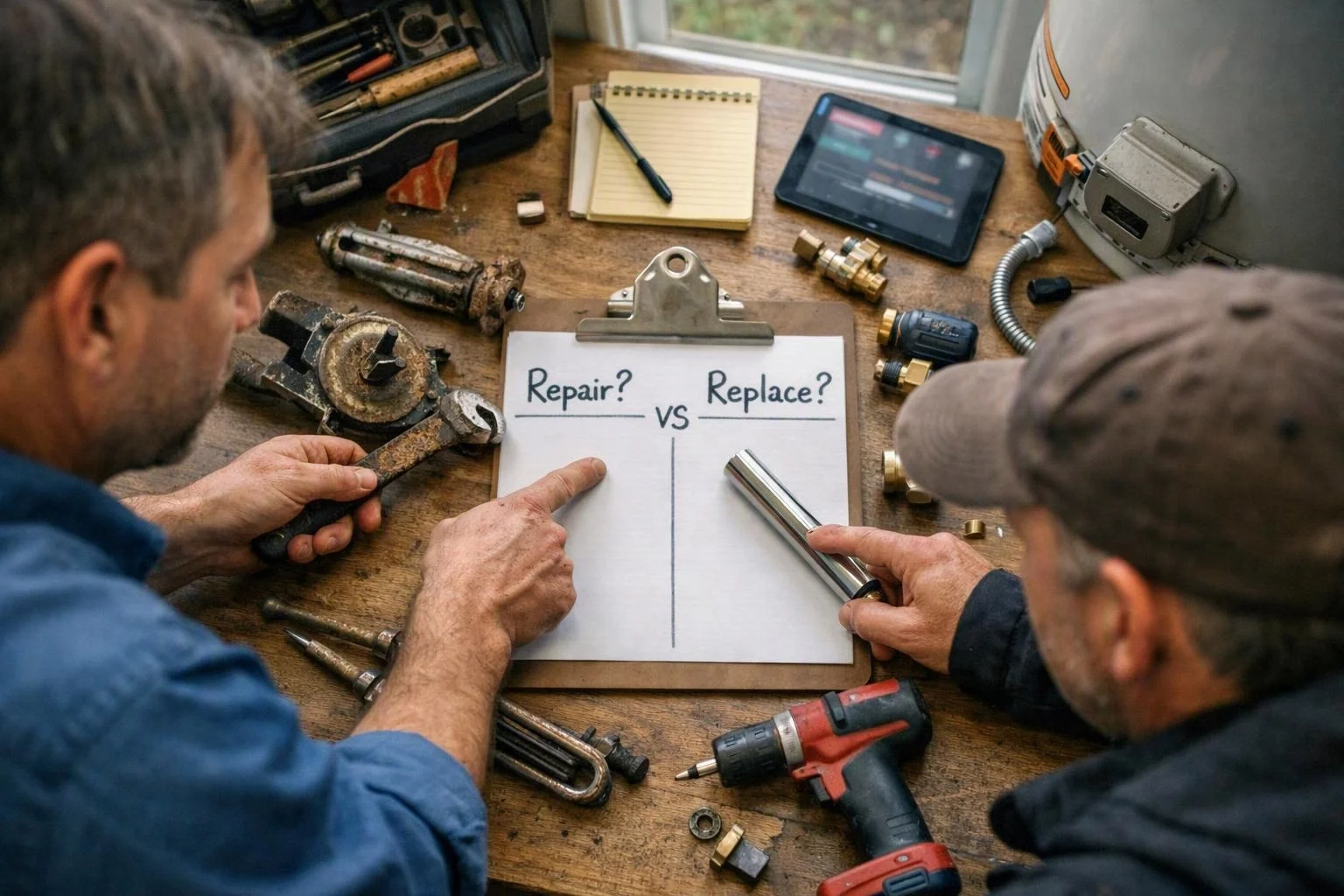
We don't recommend replacement from one symptom alone. We connect the inspection findings to safety, capacity, maintenance, and code inspection criteria.
What Changes a Water Heater Repair Quote
A water heater repair quote changes with the failed part, access, connection condition, safety work, and total repair scope.
Diagnostic work may be simple when the failure is clear. More involved drainage, difficult access, or damaged water connections can expand the labor scope.
Replacement parts may include a thermostat, heating element, gas control valve, pressure relief valve, or related connection. We explain each part and any safety correction before repair work begins.
To obtain an exact quote, we inspect the unit and prepare the repair scope from those findings.
What a Water Heater Replacement Quote Should Include
A water heater replacement quote should identify the unit, installation work, required safety components, removal, and inspection responsibilities.
Our replacement quote should identify the fuel type, tank size, labor, removal, and disposal. It should also address water connections, venting, the drain pan, and the expansion tank when required.
The quote should explain permits, inspection responsibilities, and warranty terms. These details help you compare the complete installation scope, not just the equipment.
We prepare the replacement quote after checking the existing installation and the home's operating needs.
Tank or Tankless: Which Water Heater Fits the Home?
A storage tank water heater suits steady household demand, while a tankless unit suits homes that can support its flow, fuel, electrical, and venting needs.
A storage tank water heater stores heated water for use. It can provide a familiar setup when the tank size matches household demand.
A tankless water heater heats water as it flows. Its performance depends on flow rate, simultaneous demand, fuel supply, electrical capacity, and venting.
Tankless systems may require more installation changes and planned maintenance. We review the home's connections and use pattern before recommending either option.
Can a Traditional Water Heater Be Replaced With Tankless?
Yes, a traditional water heater can be replaced with a tankless unit when the home supports the required fuel, electrical, water, and venting changes.
A tankless conversion may require a larger gas line, updated electrical service, new venting, or revised water lines. Mounting location and flow rate also affect the installation requirements.
Household demand matters because several fixtures may need hot water at the same time. Our team checks the existing system and explains the changes before preparing a tankless installation quote.
How to Choose Between Repair and Replacement
Choose water heater repair when the system is safe, the tank is sound, and the repair scope is contained.
Choose replacement when damage, repeated failures, poor capacity, or installation limits make continued service a weak fit.
Plan the Next Step for Your Water Heater
Water heater repair is the next step when inspection findings show a safe, contained failure. Water heater installation is the next step when the unit has tank damage, repeated problems, or a poor fit.
We use the inspection findings to explain the repair quote or replacement quote. Our team also reviews connections, safety needs, capacity, and code inspection requirements before work begins.
Request an exact quote through our contact page after the water heater inspection.