Tank vs. Tankless Water Heater Installation: What to Compare in Your Quotes in Maple Valley, Washington
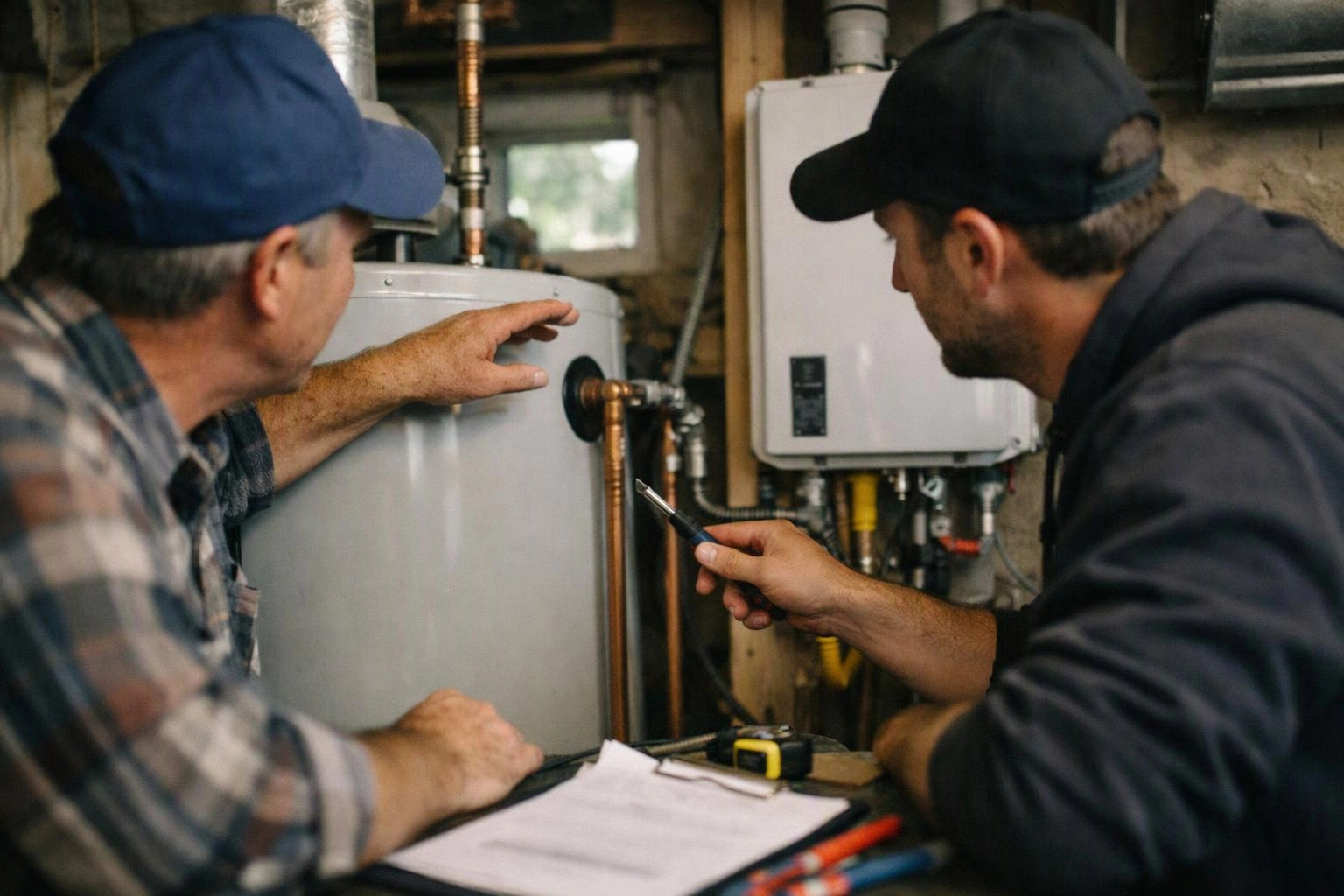
Tank and tankless water heater installation quotes differ mainly in equipment, connection work, venting, electrical needs, and site access. PlumbingMaplevalley.com compares the full installation scope so you can choose the system that fits your home and usage.
Request an EstimateOptions at a Glance
Tank and tankless systems solve the same household need in different ways. The right choice depends on demand, available connections, space, and the work included in the quote.
- Storage tank water heater: A practical fit for familiar equipment and a straightforward replacement.
- Tankless water heater: A strong fit for on-demand heating and flexible placement.
What Should a Water Heater Installation Quote Include?
A water heater installation quote should identify the equipment, connection changes, venting or electrical work, removal, testing, and inspection-related requirements.
A clear quote names the water heater model and fuel source. It also explains labor, plumbing connections, gas connection work, electrical connection work, venting, drainage, and removal and disposal. Permit and inspection criteria should be addressed when they apply to the installation.
Our water heater installation review focuses on the complete scope. That helps you compare the work behind each option, not just the equipment line.
Tank vs. Tankless Water Heater Installation at a Glance
Tank water heaters usually involve a simpler replacement scope, while tankless systems can require added gas, electrical, venting, or water-line work.
The table compares common quote factors. Actual work depends on the existing setup and the selected equipment.
| Factor | Tank Water Heater | Tankless Water Heater |
|---|---|---|
| Installation cost drivers | Often fewer connection changes when replacing a similar unit. | May require gas line, electrical capacity, venting, or water-line upgrades. |
| Installation timeline | Usually has a more direct replacement scope. | Can involve more planning when connections or vent routes change. |
| Maintenance | Needs routine attention to the tank, controls, and safety parts. | Needs maintenance for the heat exchanger, controls, and water flow path. |
| Best use case | Homes that value familiar equipment and stored hot water. | Homes that value on-demand heating and flexible placement. |
Why Choose a Tank Water Heater?
A storage tank water heater keeps heated water ready for household use. It can suit homes where the existing fuel source, plumbing, and space already support a tank.
Best for: Homes that need familiar equipment and steady stored hot water.
Best for Homes That Need Familiar Equipment and a Straightforward Replacement
A tank water heater is often the best fit when existing plumbing and installation space already support a storage tank. Household hot water demand still matters, because the tank must match how your home uses hot water.
We review the current connections, available clearance, drain pan, and access route. Those details show whether a replacement can follow the existing installation scope.
Why Choose a Tankless Water Heater?
A tankless water heater heats water as fixtures call for it. The system can offer continuous hot water, but its gas supply, electrical capacity, venting, and water flow must support the demand.
Best for: Homes that value on-demand heating and can support the required connection upgrades.
Best for Homes That Value On-Demand Heating and Flexible Placement
A tankless water heater can fit homes that want continuous hot water and a smaller equipment footprint. The fuel source must still provide enough capacity for the selected unit.
We check fixture demand, water flow, vent route, and installation clearance. These checks help prevent a quote from overlooking required gas or electrical work.
What Changes the Installation Cost on Your Job?
The installation cost depends on the water heater type, existing connections, required upgrades, access, removal, and the final testing scope.
Tankless installation may need a new gas line, electrical panel work, or a different venting route. Both systems may require water-line changes, a drain pan, drainage work, and removal of the existing water heater.
Access also affects the work because our crew must move equipment safely and protect the installation area. We prepare an exact quote after reviewing the site and defining every connection upgrade.
How Do Tank and Tankless Installation Scopes Differ?
Our team checks the home, confirms the required connections, installs the selected system, and tests operation before completing the work.
How We Check Your Home Before Quoting Water Heater Installation
We inspect the existing setup and access conditions first, because those details determine the correct equipment and installation scope.
Our team checks the fuel source, water pressure, gas line, electrical service, and vent termination. We also review installation clearance, the access route, drainage, and the condition of the existing water connections.
These checks help us identify warning signs such as limited clearance, an unsuitable vent route, or connections that cannot support the selected system. Gas and electrical changes require qualified work, so homeowners should not alter those systems themselves.
Which Water Heater Fits Your Home?
The better choice depends on household demand, available space, fuel connections, upgrade needs, and the installation scope your home can support.
A tank system may fit a home with steady hot water storage needs and compatible existing connections. A tankless system may fit a home with limited space and a suitable gas connection or electrical capacity.
Maintenance needs and replacement goals also matter. We use household usage and site conditions to explain the best fit before installation begins.
What Should You Confirm Before Approving the Quote?
Confirm that the quote covers the full equipment and installation scope before approving water heater work. A clear checklist can prevent unexpected connection changes.
Plan Your Maple Valley Water Heater Installation
PlumbingMaplevalley.com can review your current setup and prepare a quote that explains the equipment and work included.
Share your replacement goals, household hot water demand, and concerns about space or fuel connections. We’ll review the installation scope, explain tankless water heater installation requirements when relevant, and provide the quote details needed for a clear decision.
Questions About Tank and Tankless Installation
Can a tankless water heater use the existing tank water heater connections?
A tankless water heater may use some existing water connections, but the full setup must be checked first. Gas supply, electrical capacity, venting, water flow, and drainage can require changes.
Does switching to tankless require changes to the gas line or electrical service?
Yes, switching to tankless can require gas line, electrical service, or venting changes. Our team checks the fuel source and available capacity before preparing the installation quote.
What should be included when replacing an existing water heater?
An existing water heater replacement should identify equipment, labor, plumbing connections, venting or electrical work, removal, testing, and inspection-related requirements.
Which water heater is better for limited installation space?
A tankless water heater can be better for limited installation space when the fuel source, vent route, water flow, and electrical capacity support it. Our team checks those conditions before recommending the system.