Water Leak Detection: Signs, Tools, and Next Steps
Water leak detection combines visible warning signs, water meter checks, pressure testing, moisture meters, thermal imaging, and acoustic tools to locate hidden leaks. At PlumbingMaplevalley.com, we use the findings to narrow the leak location and plan the right repair.
Request an EstimateWhat Are the Signs of a Hidden Water Leak?
Hidden water leaks often show through unexplained moisture, stains, odors, sound, or changes in water use.
Water stains on ceilings or walls can point to a pipe leak behind the surface. Damp walls, soft flooring, peeling paint, and mold growth can also signal trapped water.
A musty odor may develop when building materials stay wet. Low water pressure or a running water meter can suggest a leak in the water supply system.
We compare these visible signs with your plumbing layout and water-use pattern. That helps us decide where to test first.
Which Water Leak Detection Methods Work Best?
The best water leak detection method depends on the leak's location, the plumbing system, and the evidence found during the inspection.
We often combine methods because one test may narrow the search while another confirms the leak location.
| Method | What it shows | When we use it |
|---|---|---|
| Visual inspection | Stains, damp surfaces, corrosion, and other visible signs | At the start of every inspection |
| Water meter check | Unexpected water movement when fixtures aren't being used | When water use seems unusually high |
| Moisture meter | Moisture readings inside or near building materials | When walls, floors, or ceilings may be wet |
| Thermal imaging | Temperature changes linked to water movement | Near hot water lines or concealed plumbing |
| Acoustic listening | Sounds made by water escaping under pressure | For concealed pipes and slab leak detection |
| Pressure testing | Pressure loss in an isolated plumbing section | When the supply line or pipe system may be leaking |
| Electronic leak detection | Electronic signals that help trace concealed leaks | When other findings point to a hidden pipe path |
Our team chooses the least disruptive testing path that fits the evidence. We explain the inspection findings before recommending access or repair.
How Do Plumbers Detect a Leak Under a Concrete Slab?
Slab leak detection combines pressure results, sound, temperature changes, and moisture evidence before targeted access is planned.
A hot water line may create a warm path that thermal imaging can help reveal. A cold water line may leave different temperature or moisture patterns.
Acoustic detection can pick up the sound of pressurized water escaping below the concrete slab. Pressure testing helps confirm which section of the system has lost pressure.
We compare those findings with the pipe layout before opening the surface. This approach helps limit targeted access and supports a clearer repair plan.
How Does Pressure Testing Help Locate a Water Leak?
Pressure testing shows whether an isolated plumbing section loses pressure, which helps narrow the search for a hidden leak.
We separate the water supply line or another section of the pipe system from the rest of the plumbing. We then monitor its pressure response during the test.
Pressure loss indicates that water may be escaping from that isolated section. The result doesn't always identify the exact break, so we combine it with sound, moisture, or temperature evidence.
This process helps us focus the inspection and avoid unnecessary pipe access. We use the combined findings to recommend the next safe step.
What Tools Are Used for Water Leak Detection?
Water leak detection tools help us measure moisture, trace sound, check pressure, and confirm water movement.
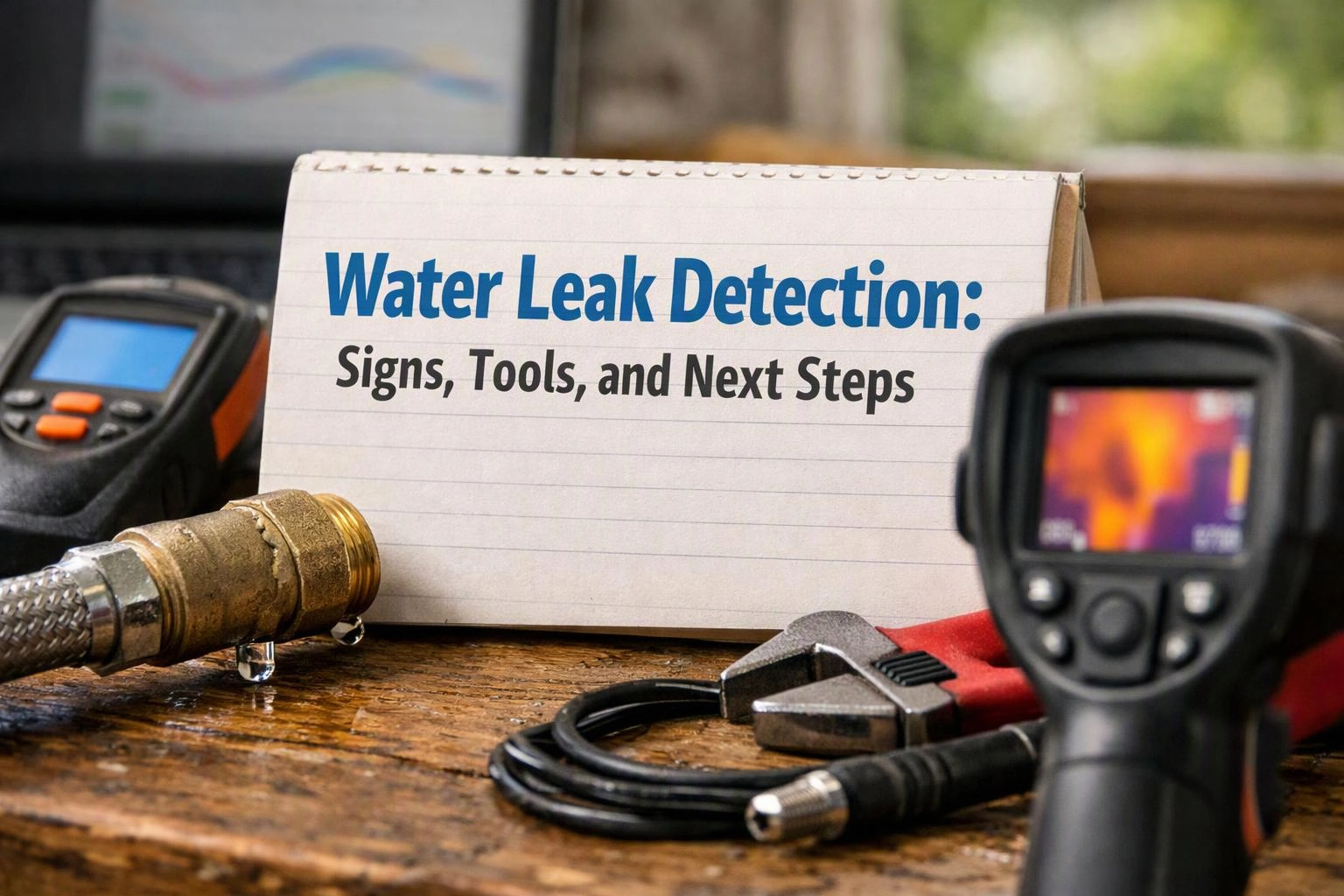
Our team selects the tools that match the suspected leak path and the building materials around it.
What Should You Do When You Suspect a Water Leak?
Water leak safety starts with limiting water flow and keeping people away from immediate hazards.
Do not open walls, cut concrete, or work near electrical equipment to search for a leak. Our team can handle the diagnostic work and recommend a safe repair path.
When Does a Water Leak Need Immediate Repair?
A water leak needs immediate repair when water is spreading, a pipe has burst, or the leak threatens electrical systems or building materials.
A burst pipe can release water quickly and cause serious water damage. Ceiling leaks also need prompt attention because wet materials may weaken and fall.
Flooding, an active leak that won't stop, and water near electrical equipment are urgent warning signs. Turn off the water if you can do so safely, and contact our team for guidance.
Burst pipe repair may require isolation, access to the damaged section, and replacement of failed pipe materials. We assess the source first so the repair addresses the actual pipe problem.
What Does a Water Leak Detection Visit Include?
A water leak detection visit includes a symptom review, targeted testing, leak location work, and an explanation of repair options and quote details.
We begin with the reported leak symptoms and inspect the water supply system and nearby areas. When needed, we also consider the drain system to separate supply leaks from drainage problems.
Our team uses the most useful combination of visual checks, meter readings, pressure testing, acoustic leak detection, and thermal imaging. We explain what each test shows and how the results support the suspected location.
After testing, we review the results and outline a repair recommendation. You can request a service quote based on the access needs, damaged materials, and selected water leak repair.
For a focused inspection, visit our water leak detection service page.
Questions About Water Leak Detection
Can water leak detection find a leak without opening walls?
Yes, water leak detection can often narrow a hidden leak without opening walls first. Our team uses visual checks, moisture readings, sound, temperature changes, and pressure results to guide the search. Targeted access may still be needed to confirm or repair the damaged pipe.
Can a water meter show that a leak is present?
Yes, a water meter can suggest a leak when it shows water movement while fixtures are off. The reading points to possible water use, but further testing helps identify the source. We compare the meter result with the plumbing layout and other signs.
Can a hidden leak cause low water pressure?
Yes, a hidden leak can cause low water pressure when water escapes from a supply line. Low pressure can also have other causes, so we use pressure testing and related checks to narrow the problem. The inspection findings guide the repair plan.
What happens after the leak location is confirmed?
After the leak location is confirmed, our team explains the access needs, repair choices, and service quote details. We account for the damaged pipe, nearby materials, and the safest repair path. Water leak repair can then be planned around those findings.
Should I shut off the water before a leak inspection?
Yes, you should shut off the water when the leak is active and the water shutoff valve is safe to reach. Shutoff can limit additional water damage while you arrange an inspection. Do not approach the valve if water is near electrical equipment or the area is unsafe.
When testing confirms the leak location, we can explain the repair path and the work included in the quote.
Related Resources
Emergency Plumber vs. Standard Appointment: What to Compare Before You Book
Compared ToWhole-House Repiping vs. Spot Repair: Which Project Should You Hire For?
Compared ToLeak Detection vs. Leak Repair: What to Include in Your Plumbing Quote
When You Need ItHow to Spot a Hidden Water Leak in Your Home