Why a Toilet Keeps Clogging or Flushing Poorly
A toilet keeps clogging or flushing poorly when waste flow is blocked, the tank lacks enough water, or internal parts are worn or misadjusted. At PlumbingMaplevalley.com, we check the bowl, tank, trapway, drain connection, and flush performance to identify the cause.
Request an EstimateWhat Does a Poorly Flushing Toilet Tell You?
A poorly flushing toilet usually signals restricted water flow, an incomplete flush, or a blockage in the toilet or drain.
A strong toilet flush should move waste through the bowl, trapway, and drain line. A weak flush may leave waste in the toilet bowl or cause slow drainage. The problem can come from the fixture, the water supply, or a deeper drainage restriction.
Our Toilet Repair service separates toilet faults from drain problems before we recommend repair work.
Signs Your Toilet Has a Recurring Clog or Flush Problem
A recurring toilet clog usually shows a pattern that returns after normal plunging or flushing.
These signs can point to a partial blockage in the toilet or a restriction farther along the drain system. Bubbling with slow drainage deserves prompt inspection because the issue may involve shared piping.
Common Reasons a Toilet Keeps Clogging
A toilet keeps clogging when waste cannot pass through the fixture or connected drain system.
A worn flapper or faulty fill valve can also reduce flushing power. Our team checks these parts before treating a repeated clog as a simple bowl blockage.
How Toilet Parts and Drain Lines Affect Flushing
The toilet tank controls how much water enters the bowl and how strongly the flush begins. The fill valve restores tank water, while the flapper valve releases water into the bowl.
The flush valve directs that tank water through the bowl. A worn flapper can leak water, and a misadjusted flush valve can limit the flush. Low tank water can also leave the toilet with too little force for proper waste removal.
The toilet trapway carries waste from the bowl into the branch drain. A restriction there can cause a partial toilet blockage. A branch drain or main sewer line problem can affect more than one fixture.
What Toilet Bubbles and Gurgling During a Flush Mean?
Toilet bubbles or gurgling during a flush usually mean air is being pushed through restricted drainage or venting.
A drain blockage can force air back through the bowl. A blocked or restricted vent stack can also disturb air pressure in the pipes. The result may be a gurgling toilet, slow drainage, or water movement in nearby fixtures.
A sewer line restriction becomes more likely when several fixtures drain slowly. Our team checks the toilet, connected drain, vent path, and sewer line to locate the source.
How We Check a Toilet That Keeps Clogging
Our toilet inspection starts with the fixture and follows the waste path toward the drain system.
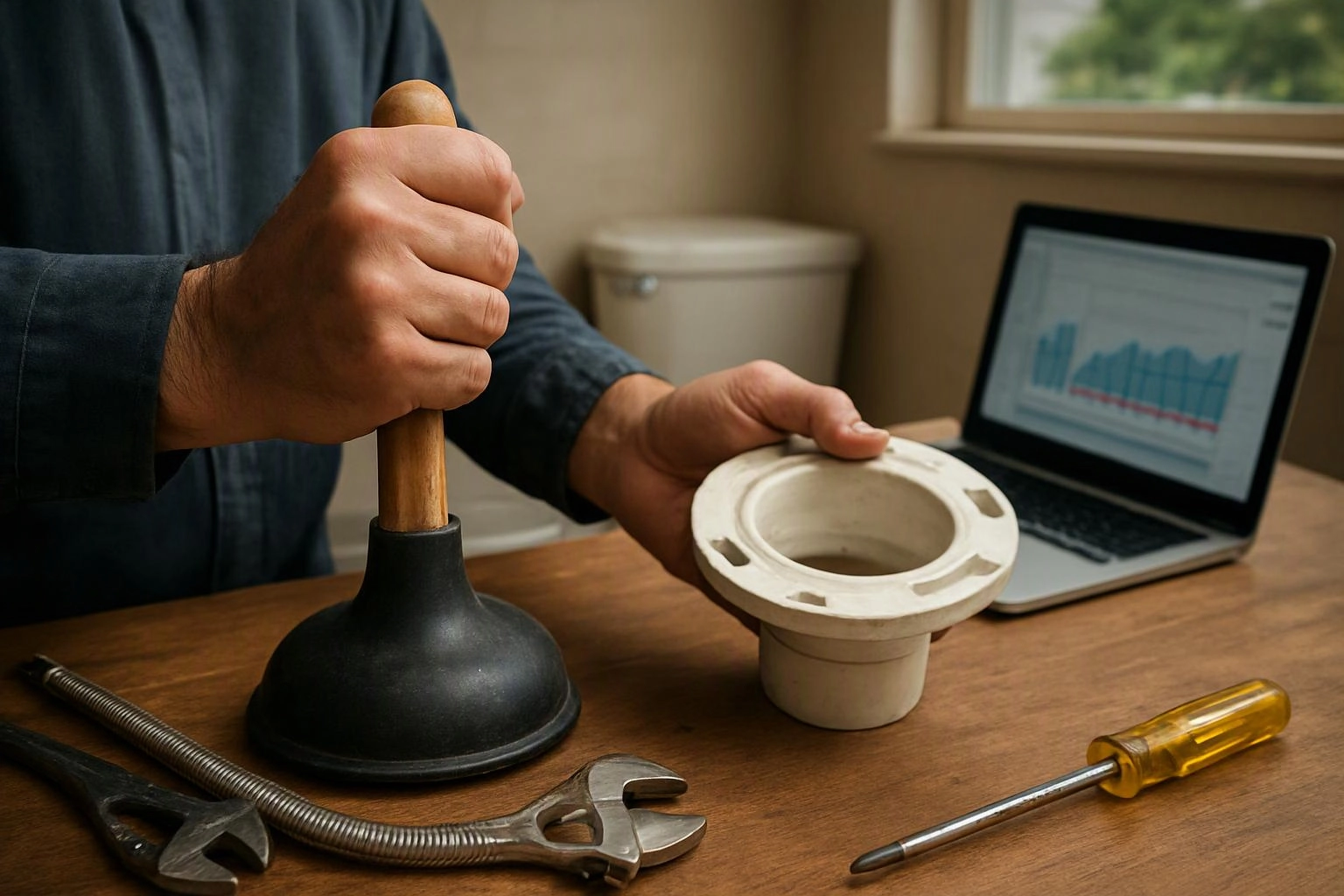
Our team uses the inspection results to separate a fixture repair from a drain repair. We discuss the work before starting it.
Toilet Symptoms and Their Most Likely Causes
Toilet symptoms provide useful clues, but several faults can produce the same weak flush.
| Toilet symptom | Most likely area | What the symptom can mean |
|---|---|---|
| Weak flush | Tank or flush valve | Low tank water or limited valve flow |
| Repeated clog | Trapway or drain line | Partial blockage or foreign object |
| Slow refill | Fill valve or water supply | Restricted supply or faulty fill valve |
| Bubbling toilet | Drain or vent stack | Air pressure changes from a drain restriction |
| Slow drainage | Trapway or sewer line | Partial blockage beyond the bowl |
The pattern matters because a toilet part problem needs a different repair from a drain restriction. Our inspection confirms which area needs attention.
Ways to Prevent Repeated Toilet Clogs
Toilet maintenance reduces avoidable clogs and helps reveal developing problems early.
Repeated plunging may clear a symptom without removing the cause. A recurring blockage should be inspected when it returns or affects other fixtures.
When Toilet Repair Is the Right Next Step
Toilet repair is the right next step when a worn part, leak, slow refill, or recurring blockage affects normal use.
A leaking toilet can waste water and may damage nearby surfaces. A slow refill can leave the tank below its working water level, which weakens the next flush.
Our team also checks for sewer drain symptoms before repairing the fixture. Contact PlumbingMaplevalley.com when clogs return, bubbling continues, or more than one fixture drains slowly.
What Changes the Cost of Fixing a Clogged Toilet?
The cost of fixing a clogged toilet depends on the blockage location, damaged parts, access, and whether the drain also needs repair.
A blockage inside the toilet may require a different repair scope from a restriction in the branch drain or sewer line. The toilet component involved also matters, including the fill valve, flapper valve, or flush valve.
Our quote explains the inspection findings, needed parts, drain access, and repair scope. Contact our team for an exact quote based on the conditions at your toilet.
Questions About Repeated Toilet Clogs
When should a recurring toilet clog be inspected?
A recurring toilet clog should be inspected when plunging only provides temporary relief or other fixtures drain slowly. Our team checks for a blocked trapway, drain blockage, faulty parts, and sewer line restrictions.
Can a clogged sewer line make one toilet flush poorly?
Yes, a clogged sewer line can make one toilet flush poorly when that fixture connects near the restriction. Our team compares nearby fixture symptoms to determine whether the problem reaches beyond the toilet.