What Whole-Home Low Water Pressure May Mean
Low water pressure throughout a house usually points to a shared supply, pressure regulator, pipe, or leak problem. PlumbingMaplevalley.com checks the whole system to isolate the cause and match the repair to the finding.
Request an EstimateWhat Does Low Water Pressure Throughout a House Usually Mean?
Whole-home water pressure problems usually affect a shared part of the plumbing system.
The cause may be the water supply, a main valve, or a restricted water line. A failing pressure regulator can also reduce flow throughout the house.
When every fixture has weak flow, we look beyond one faucet. A single clogged aerator usually affects only that fixture.
What Signs Point to a Whole-Home Pressure Problem?
Whole-home pressure problems show up across several fixtures and water-using appliances.
These signs help separate a shared flow problem from a fixture-specific issue.
What Can Cause Low Water Pressure at Every Faucet?
Low pressure at every faucet can come from a restricted supply, faulty pressure regulator, clogged line, or leak.
We check these shared components because each one can affect the entire plumbing system.
How Can You Tell Where the Pressure Problem Starts?
The pressure problem starts near the first point where flow weakens, such as the supply entry, regulator, filter, or water line.
We compare flow at the water meter, the main shutoff valve, and the fixtures. This helps us see whether the restriction begins before or after the home’s entry point.
We also inspect the pressure regulator and whole-house filter. A restricted water service line can cause weak flow throughout the building.
Can a Water Leak Cause Low Water Pressure?
Yes, a significant water leak can reduce available pressure by diverting water before it reaches fixtures.
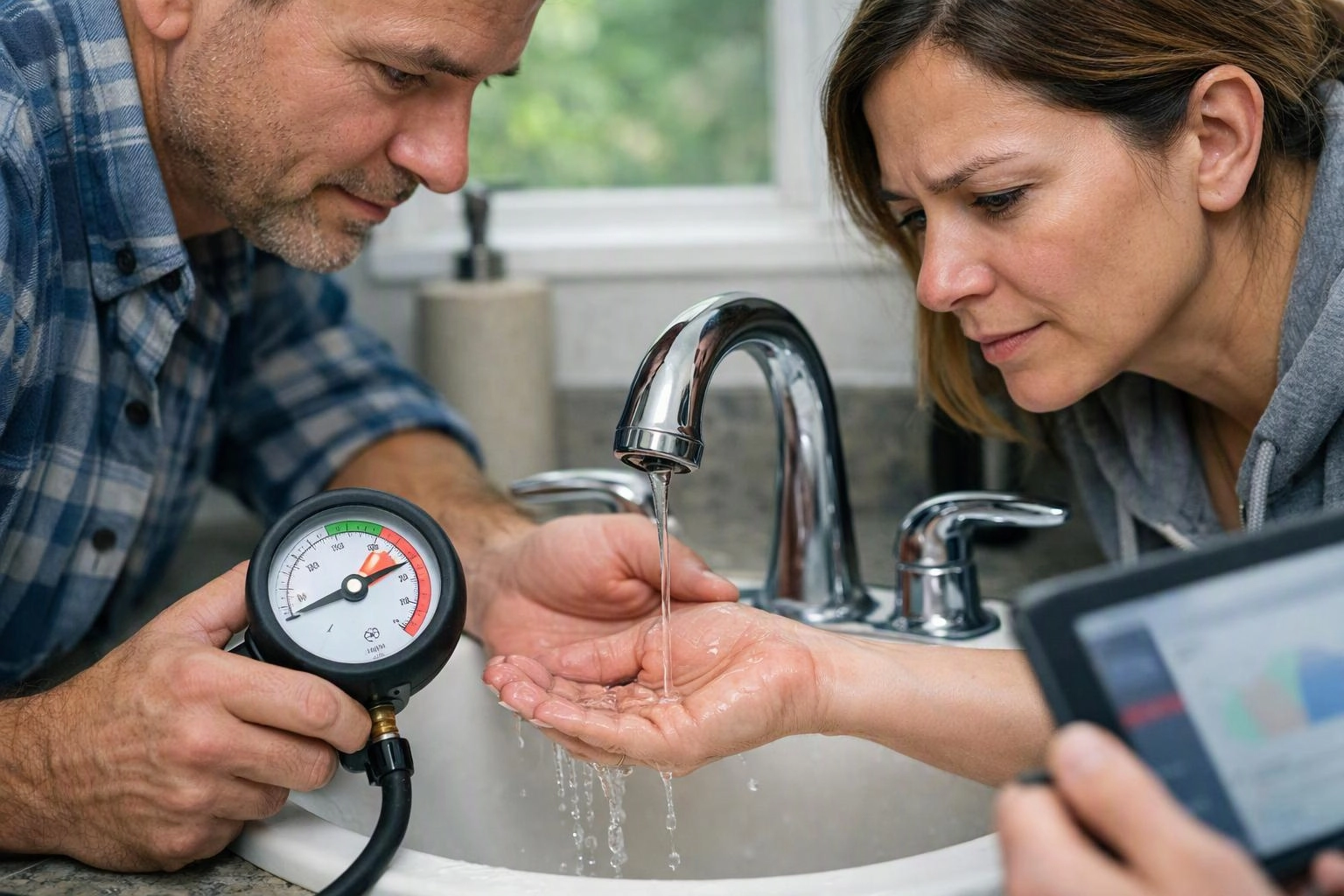
A hidden water leak may cause a water pressure drop without an obvious indoor puddle. We look for unusual meter movement, wet soil, damp areas, and signs of water damage.
Leak detection helps us locate the source before we recommend pipe or service-line work.
Why Is Hot Water Pressure Lower Than Cold Water Pressure?
Lower hot water pressure usually points to a restriction in the water heater or hot water piping.
Sediment buildup can limit flow through the water heater and hot water line. A partly closed hot water shutoff valve can create a similar symptom.
If cold water pressure remains strong, the issue likely begins after the cold supply enters the heater. We compare hot water pressure with cold water pressure to narrow the finding.
How We Diagnose Whole-Home Low Water Pressure
Our team traces pressure loss from the water supply to the affected fixtures.
We use the findings to recommend only the repair that matches the cause.
Which Repair Fits the Cause of Low Water Pressure?
The correct repair depends on where our testing finds the restriction or water loss.
Water Pressure Repair may address a pressure regulator or another pressure-control problem. Water Line Repair may fit a damaged or restricted water service line.
Water Leak Detection helps us locate a plumbing leak before repair work begins. We explain what the quote includes, such as access needs, replacement parts, and the affected section of piping.
How Can You Help Prevent Whole-Home Pressure Problems?
Routine checks can reveal restrictions and leaks before they affect every fixture.
Our team can inspect the system when pressure changes continue or return.
When Should You Arrange Water Pressure Repair?
Arrange water pressure repair when low flow affects the whole home, continues after basic checks, or appears with leak signs.
Sudden pressure loss deserves prompt attention, especially when you see a visible leak or water damage. Persistent low pressure can also point to a failing valve, restricted line, or hidden leak.
Our team can test the system and explain whether Water Pressure Repair, Water Line Repair, or Water Leak Detection fits the finding.
Get a Free EstimateQuestions About Whole-Home Water Pressure
Does a clogged faucet aerator cause low pressure throughout the house?
No, a clogged faucet aerator usually affects only the faucet where the aerator is installed. Low pressure at several fixtures points to a shared supply, valve, line, or leak problem.
What should you do when water pressure suddenly drops everywhere?
Check for visible leaks and confirm that accessible shutoff valves have not been moved. If the pressure stays low, our team should test the supply, regulator, water line, and plumbing system for the source.
Related Resources
Water Line Repair vs. Replacement: How to Compare the Work and Quotes
Compared ToWhole-House Repiping vs. Spot Repair: Which Project Should You Hire For?
Compared ToLeak Detection vs. Leak Repair: What to Include in Your Plumbing Quote
When You Need ItHow to Spot a Hidden Water Leak in Your Home