Garbage Disposal Problems: Humming, Leaks, and Poor Drainage
Garbage disposal problems usually come from jams, failed components, loose connections, or blocked drain lines. At PlumbingMaplevalley.com, we explain the warning signs, safe checks, and when our team should handle the repair.
Request an Estimate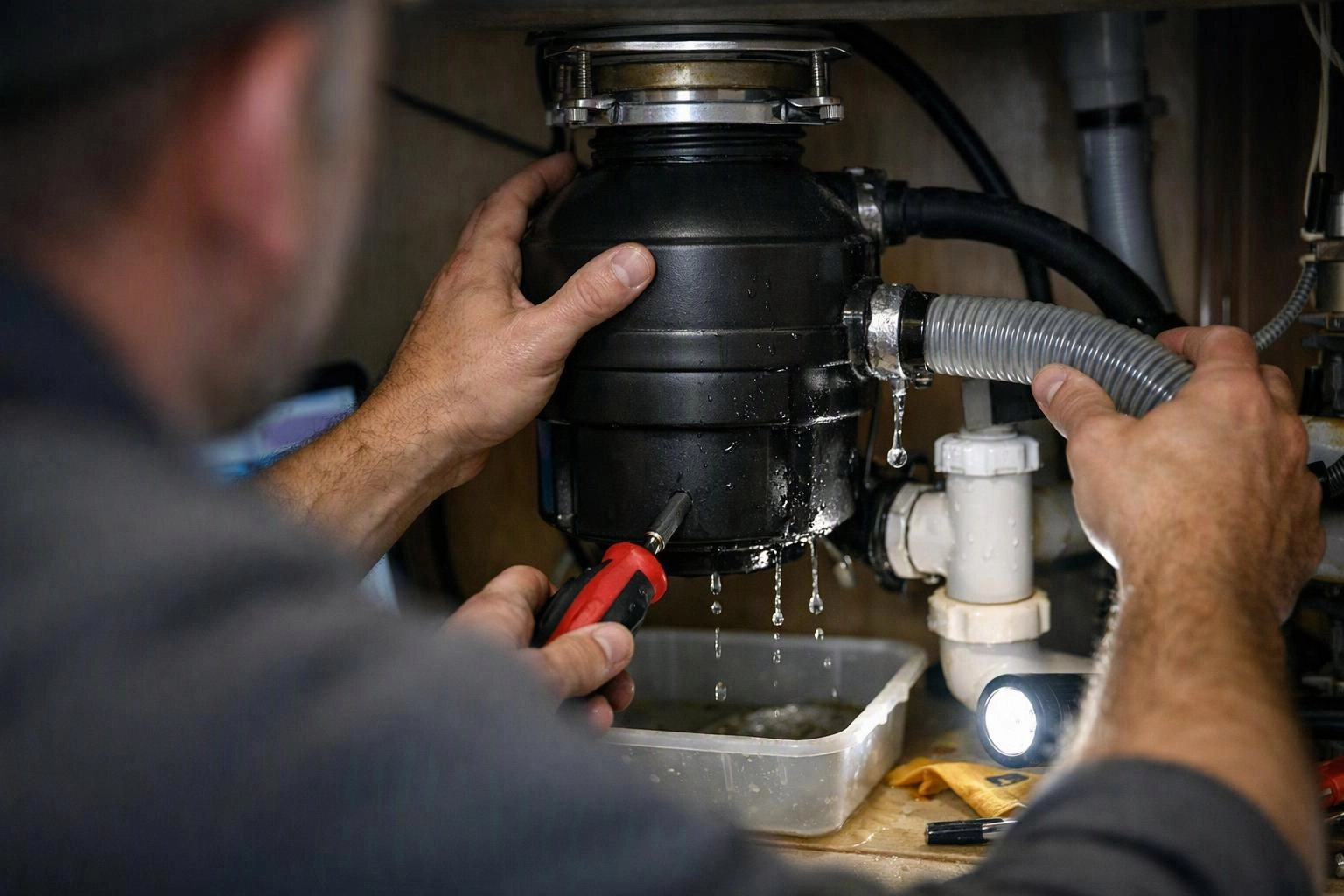
What Signs Point to a Garbage Disposal Problem?
Garbage disposal problems show up through humming, leaks, slow drainage, unusual sounds, odors, or a disposal that won't start. These signs can involve the disposal, the sink drain, or a connected drain line.
Why Is the Garbage Disposal Humming but Not Working?
A garbage disposal that hums but won't work usually has a jammed grinding mechanism or a motor that can't turn.
The humming motor may be receiving power while the impeller or flywheel cannot rotate. Food waste or a foreign object can jam the grinding chamber. An overload protector may also have tripped after the motor struggled.
We check the electrical connection, motor condition, and internal movement without placing hands inside the unit. A seized disposal motor often needs repair or replacement based on its condition.
What Causes a Garbage Disposal to Leak?
A leaking garbage disposal usually has a loose connection, failed seal, damaged hose, or cracked housing.
Water near the top of the unit often points to the sink flange or gasket. Water near the side may come from the discharge pipe or a plumbing connection. A dishwasher hose can also leak where it joins the disposal.
Corrosion can weaken seals and metal parts over time. We trace the leak while checking the housing, sink flange, gasket, discharge pipe, and dishwasher hose.
Why Won't the Garbage Disposal Drain?
A garbage disposal that won't drain usually has a blockage in the discharge pipe, P-trap, or connected drain line.
Standing water may remain inside the sink when food waste blocks the discharge tube. The blockage can also extend into the branch drain or the dishwasher connection. A clogged sink doesn't always mean the disposal itself is blocked.
We test the drain path from the disposal through the P-trap and branch drain. Our Garbage Disposal Repair service can include drain cleaning when the connected line is the source.
Common Causes of Garbage Disposal Problems
Most disposal failures trace back to damaged parts, incorrect use, or trouble in the connected plumbing.
What Should You Check Before Garbage Disposal Repair?
Before garbage disposal repair, check the switch, breaker, reset button, visible connections, and drain symptoms without reaching into the unit.
These checks help describe the symptom, but they don't replace a full diagnosis. We handle electrical diagnosis and plumbing repairs when the cause isn't clear.
When Is a Garbage Disposal Problem Unsafe to Handle Yourself?
A garbage disposal problem is unsafe to handle yourself when electrical parts, sharp internal components, persistent leaks, or hidden plumbing damage may be involved.
An electrical hazard can develop when water reaches wiring or connections. Sharp grinding components can also cause serious injury, even when the disposal appears inactive.
Call our team for a seized motor, a persistent leak, or signs of plumbing damage below the sink. We isolate power, protect the work area, and inspect the appliance and drain system safely.
How We Diagnose Garbage Disposal Problems
Our diagnosis connects the visible symptom to the failed disposal part or drain fault.
Repair or Replacement: Which Option Fits the Problem?
Garbage disposal repair fits isolated faults, while replacement fits major housing or motor damage.
| Condition | Likely direction | Why it matters |
|---|---|---|
| Drain blockage | Repair or drain cleaning | The disposal may still work correctly. |
| Seal failure | Repair when the housing remains sound | A failed gasket or connection may be isolated. |
| Motor condition | Repair or replacement assessment | A seized or failed motor can affect the full unit. |
| Housing damage | Replacement is often considered | A cracked housing can continue leaking after seal work. |
Our team considers the repair scope, part condition, drain blockage, and plumbing access before explaining the options.
How Can You Prevent Future Garbage Disposal Problems?
Regular sink drain care and careful disposal use can reduce jams, odors, and leaks.
What Changes the Cost of Garbage Disposal Repair?
Garbage disposal repair cost depends on the failed part, access, drain condition, electrical issue, and whether repair or replacement is needed.
Replacement parts, drain cleaning, and access to plumbing can change the repair scope. Electrical diagnosis may also add work when the switch, breaker, wiring, or disposal motor is involved.
We inspect the full problem before preparing a quote. Our quote explains the needed repair, replacement parts, drain work, electrical checks, and extent of damage.
Get Help With a Humming, Leaking, or Clogged Disposal
PlumbingMaplevalley.com can inspect the disposal, identify the fault, and explain the repair or drain cleaning work needed.
Our team handles Garbage Disposal Repair, leak repair, and Drain Cleaning when the disposal or connected drain line fails. Contact us to describe the humming, leaking, poor drainage, or strange noise.
Questions About Garbage Disposal Problems
Can a humming garbage disposal be fixed?
Yes, a humming garbage disposal can often be fixed when the cause is a jam, overload protector, loose electrical connection, or isolated motor fault.
Why does my garbage disposal smell bad after it drains?
A garbage disposal can smell bad after draining when food waste remains in the grinding chamber, P-trap, or connected drain line.
Can a garbage disposal leak from the bottom?
Yes, a garbage disposal can leak from the bottom when its internal seal or housing has failed.
Does a clogged sink always mean the garbage disposal is blocked?
No, a clogged sink can also come from the P-trap, branch drain, discharge tube, or another connected drain section.
Should I use chemical drain cleaner in a garbage disposal?
No, chemical drain cleaner can damage disposal parts, seals, and connected plumbing, while also creating a safety hazard during service.
Related Resources
Signs a Drain Clog Is More Than a Single Slow Fixture
Everything About ItWhat a Plumber Can Help With: Common Services and When to Call
Compared ToHydro Jetting vs. Drain Snaking: Which Service Should You Book?
Compared ToSewer Camera Inspection vs. Cleaning: What to Book Before Approving Work