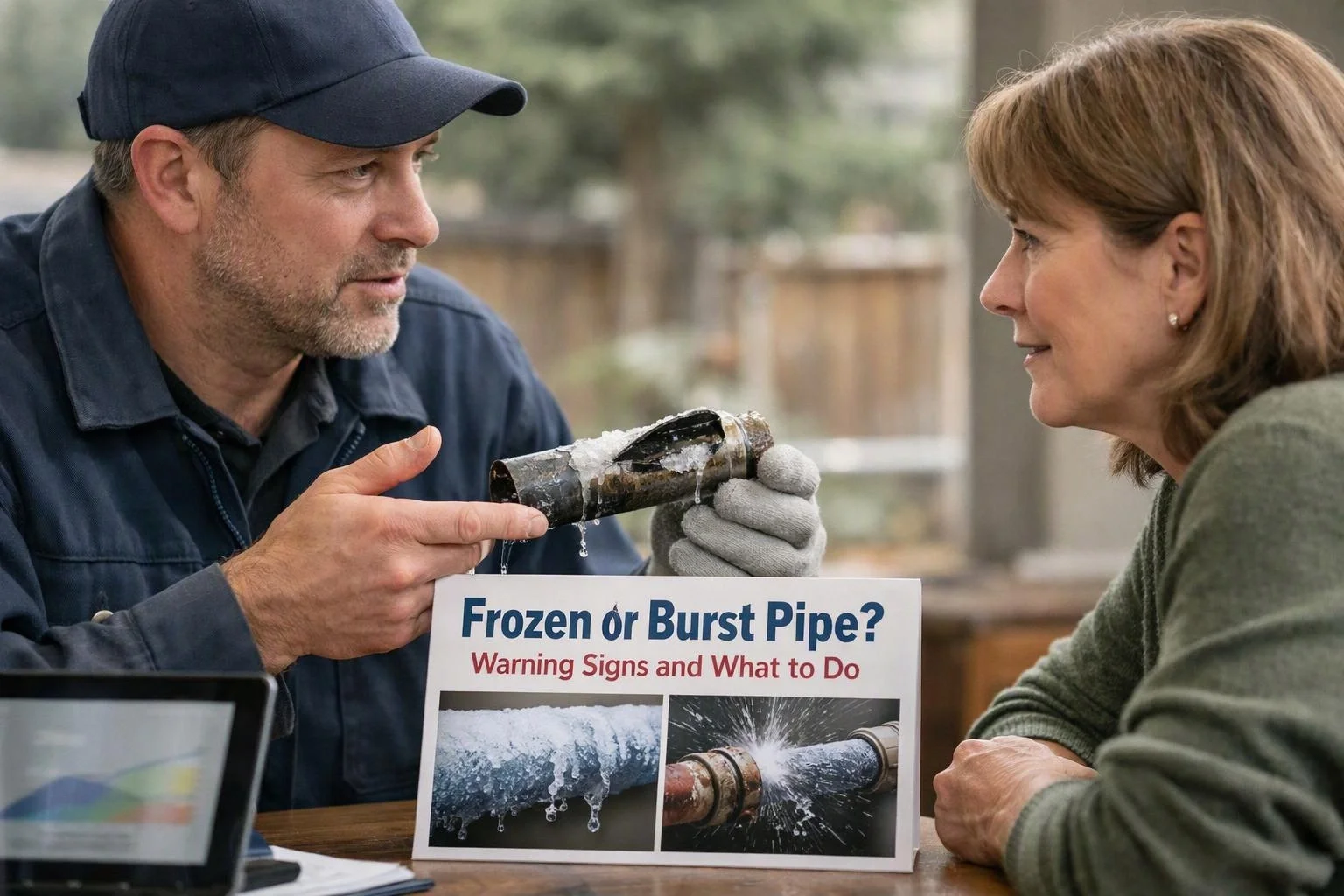
Frozen or Burst Pipe? Warning Signs and What to Do
Frozen or burst pipe signs include weak flow, no water, bulging surfaces, leaks, water stains, and unusual pipe noises. At PlumbingMaplevalley.com, we can help identify the problem and complete the needed repair safely.
Request an EstimateHow Can You Tell if a Pipe Is Frozen or Burst?
A frozen pipe usually reduces or stops water flow, while a burst pipe releases water or leaves visible damage.
A frozen pipe may cause low water pressure or no water at one fixture. The pipe can still hold water under pressure. A burst pipe creates a plumbing leak, dripping water, or sudden water loss.
Water pressure can change when ice blocks a line or when a cracked section releases water. Check nearby walls, ceilings, cabinets, and floors for signs of a hidden leak.
What Are the Warning Signs of a Frozen or Burst Pipe?
Frozen or burst pipes often show changes in water flow, surface damage, or pipe sounds.
Use this checklist before deciding whether the problem needs urgent attention. One sign may have several causes, so avoid opening walls or handling damaged plumbing yourself.
Why Do Pipes Freeze or Burst?
Frozen pipes form when cold conditions stop water from moving normally through a vulnerable line.
Ice expands inside a pipe and can increase pressure between the ice and a closed valve. The pipe may split during freezing or release water after thawing begins.
How Do Frozen and Burst Pipe Repairs Differ?
Frozen pipe repair focuses on safe thawing and checking for damage, while burst pipe repair focuses on stopping the water and restoring the line.
Our team chooses the repair method after checking the pipe condition and surrounding water damage. Safe access matters because hidden leaks can continue behind walls or ceilings.
| Condition | What we check | Likely work |
|---|---|---|
| Frozen pipe | Blocked flow, exposed frost, pressure changes, and pipe condition | Controlled pipe thawing, leak checks, and repair if damage appears |
| Burst pipe | Leak location, water flow, damaged joints, and affected surfaces | Water shutoff, damaged-section repair or pipe replacement, and water damage control |
Thawing pipes without checking for a split can allow water to escape suddenly. We may recommend pipe replacement when the damaged section cannot provide a reliable seal.
What Should You Do When a Pipe May Have Burst?
Shut off the main water supply if it’s safe, limit water damage, and contact our team for inspection and repair.
Move away from unsafe areas, especially where water may have reached electrical outlets or equipment. Do not touch electrical parts while standing in water.
Call for help when you cannot find the shutoff, cannot reach it safely, or cannot stop the leak. We can trace the leak and protect the water supply before completing the repair.
How We Check a Frozen or Burst Pipe
Our plumbing inspection identifies the affected line, the leak source, and the condition of nearby plumbing.
We begin with pipe tracing and visible checks around fixtures, walls, ceilings, and access points. Our team uses leak detection methods suited to the suspected pipe location.
We check whether the pipe has frozen, cracked, split, or separated at a pipe joint. We also assess water damage so the repair plan addresses both the plumbing problem and the affected area.
For related pressure symptoms, What Whole-Home Low Water Pressure May Mean can help explain broader supply problems. We focus our inspection on the signs present at your property.
When Does a Frozen Pipe Need Professional Repair?
A frozen pipe needs our help when flow stays blocked, the pipe shows damage, or safe access isn’t possible.
A hidden pipe can split inside a wall cavity and leak after thawing. Repeated freezing can also weaken a line, even when no leak is visible yet.
Inaccessible plumbing may require careful tracing and controlled access. Licensed plumbing work is the safer choice when the repair affects the water supply, concealed piping, or connected fixtures.
Our team can explain the repair plan for a frozen supply pipe and connect you with our Frozen Pipe Repair service. We check the completed work for leaks before restoring normal use.
What Can Prevent Pipes From Freezing or Bursting?
Pipe protection works best when it reduces cold exposure and keeps water lines accessible.
Prevention cannot correct a damaged pipe, but it can reduce stress during cold weather. Check vulnerable areas before cold air reaches the plumbing.
What Changes the Cost of Frozen or Burst Pipe Repair?
Frozen or burst pipe repair cost depends on the damaged section, access, repair method, and related water damage.
Pipe location affects how easily our team can reach the problem. Pipe access, pipe material, repair scope, and replacement needs also shape the work.
A visible burst line may require less access work than a hidden wall leak. Water damage can add cleanup or restoration needs beyond the plumbing repair.
We explain the work included when we provide a quote. Contact our team so we can inspect the condition and give you an exact quote for the needed repair.
Contact our team about frozen or burst pipe repair
Get a Free EstimateQuestions About Frozen or Burst Pipes
Can a frozen pipe thaw without bursting?
Yes, a frozen pipe can thaw without bursting when the pipe and its joints remain undamaged. A leak can still appear during or after thawing, so blocked flow should be checked carefully.
Is a frozen pipe always damaged?
No, a frozen pipe isn’t always damaged. A plumbing inspection can show whether the pipe, joints, or connected fixtures need repair.
Can a burst pipe be hidden behind a wall?
Yes, a burst pipe can be hidden behind a wall or ceiling. Water stains, bulging drywall, damp smells, and changing water pressure can point to a concealed leak.
What should I do if I cannot find the main water shutoff?
Contact our team if you cannot find the main water shutoff or reach it safely. Move away from electrical hazards and limit contact with standing water while waiting for help.
Related Resources
What a Plumber Can Help With: Common Services and When to Call
Compared ToEmergency Plumber vs. Standard Appointment: What to Compare Before You Book
Brand vs BrandEmergency Plumbing Companies Worth Comparing in Maple Valley (2026)
Brand vs BrandPlumbingMaplevalley.com vs Local Emergency Plumbing Alternatives in Maple Valley: Side-by-Side Comparison