Backflow Testing vs. Preventer Repair: Compare the Service Before Booking
Backflow testing verifies whether a backflow preventer performs as required, while repair corrects a failed or damaged component. PlumbingMaplevalley.com can test the device, explain the result, and outline repair work when needed. The right request depends on the device condition, testing needs, repair scope, and required documentation.
Request an EstimateQuick Picks
Backflow testing and preventer repair address different stages of water safety service. Use the service that matches the problem you need to solve.
- Backflow testing fits routine verification and requests for documented performance results.
- Backflow preventer repair fits a failed test, visible leak, or damaged device.
What’s the Difference Between Testing and Repair?
Backflow testing evaluates performance, while backflow preventer repair corrects a defect found during testing or inspection.
A backflow preventer is a plumbing device that helps stop contaminated water from entering the clean water supply. Testing checks whether the device provides backflow protection under the required inspection criteria.
Repair addresses the cause of a failed result. The work may involve a check valve, shutoff valve, seal, spring, or another serviceable part.
For more detail about the verification process, see our Backflow Testing service page.
Backflow Testing vs. Preventer Repair at a Glance
Backflow testing is the evaluation service, and preventer repair is the corrective service when the device doesn’t perform properly. Testing may lead to a repair estimate, but the services have different scopes.
| Factor | Backflow Testing | Backflow Preventer Repair |
|---|---|---|
| Purpose | Evaluates device performance. | Corrects a defect or failed component. |
| Cost drivers | Device type, access, testing scope, and documentation. | Repair scope, replacement parts, access, and follow-up testing. |
| Service timeline | Based on access and testing requirements. | Based on the failed part, repair scope, and part availability. |
| Maintenance | Supports routine verification and early fault detection. | Restores operation after wear, leaks, corrosion, or debris. |
| Best for | A device that needs performance confirmation. | A device with a failed test or visible defect. |
Testing usually comes first when the device condition is unclear. Repair becomes the next step when the test result identifies a correctable problem.
What Backflow Testing Checks
Backflow testing checks whether the preventer stops contaminated water from moving into the clean water supply.
Our team checks the pressure zones and observes how the device responds. We also examine check valves, shutoff valves, test cocks, and related parts.
The test result shows whether the device meets the applicable inspection criteria. We provide test documentation so you can understand the outcome and address follow-up work.
Why You Might Need Backflow Preventer Repair
Backflow preventer repair is needed when testing or inspection shows that the device can’t protect the water supply correctly.
A failed test may point to a worn check valve, damaged parts, a leaking valve, corrosion, or debris. Each issue can affect pressure control and backflow protection.
Our team identifies the failed component and explains the repair scope. We also explain when replacement is more suitable than repairing an older or badly damaged preventer.
The Advantages of Backflow Testing
Backflow testing gives you a clear performance check before a small fault becomes a larger water safety concern. The results also help guide maintenance decisions.
Testing is useful even when the device looks normal from the outside. Internal valve problems may not show through a visual inspection alone.
What Backflow Testing Is Best For
Backflow testing is best for confirming that an installed preventer still works and identifying whether repair is necessary.
Choose testing for routine verification, an inspection request, or a new concern about the backflow preventer condition. Our team can explain the result and outline the next service based on the findings.
The Advantages of Backflow Preventer Repair
Repair restores a preventer when a serviceable part has stopped working correctly. The work can improve valve operation and restore the device’s protective function.
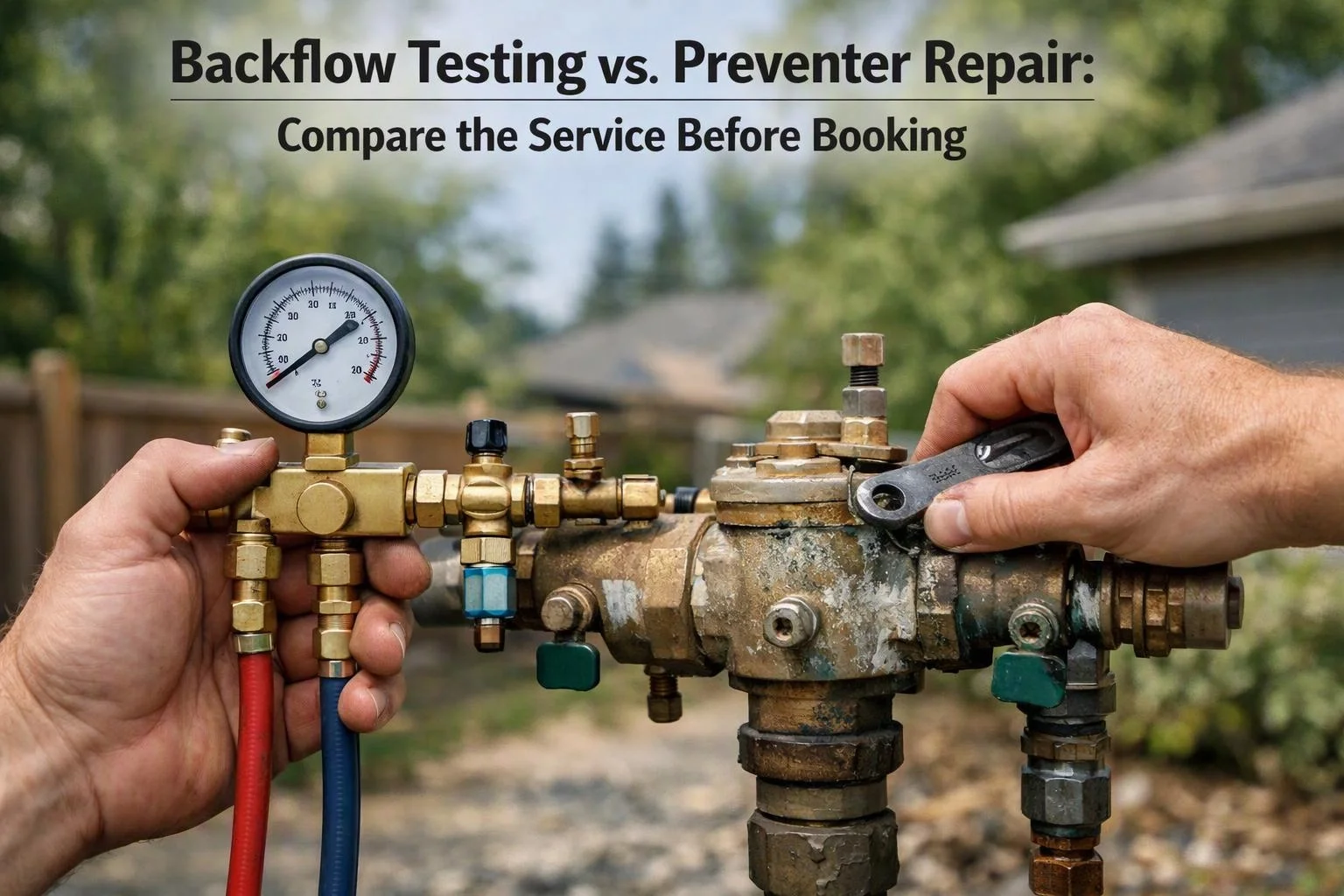
Our team verifies the repair scope before work begins. We also explain whether follow-up testing is needed after the repair.
What Backflow Preventer Repair Is Best For
Backflow preventer repair is best for restoring a device that has failed testing, developed a defect, or no longer protects the water supply.
A failed test helps narrow the repair scope to the affected component. A damaged preventer may require replacement when repair parts can’t restore safe operation.
Our team reviews the device condition and explains the replacement decision before proceeding. You’ll know which parts and services the repair estimate covers.
Does Backflow Testing Include Repairs?
No, backflow testing can identify a repair need, but repair is a separate scope of work that should be explained before it begins.
The test service evaluates operation and records the test result. Repair involves labor, replacement parts, and corrective work based on the failed component.
Our team can provide a repair estimate after reviewing the test findings. Follow-up testing may be needed to confirm the device works after repair.
What Should a Backflow Service Quote Include?
A backflow service quote should identify the requested test or repair, the device involved, the work included, and any follow-up testing needed.
Our team uses the test result and device condition to explain the quote. This helps prevent unclear work descriptions and unexpected scope changes.
When Should You Request a Separate Repair Estimate?
Request a separate repair estimate when testing finds a defect, because the repair scope depends on the failed component and device condition.
A visible leak also supports requesting repair details before booking corrective work. The estimate should explain whether the preventer can be restored or needs replacement.
Our team can connect the repair recommendation to the test result. That makes the reason for each part and labor item easier to understand.
How We Handle Testing and Repair Requests
Our team handles testing and repair requests by separating the performance check from any corrective work.
We keep the service explanation clear so you can make a safe booking decision. Regulated plumbing work should be completed by our licensed team, not through improvised repairs.
Which Backflow Service Should You Book?
Book backflow testing when you need performance verified, and request repair when a failed test or visible defect already points to a problem.
Testing is the better starting point when you don’t know the device condition. Repair is the better request when inspection findings already identify a leaking, damaged, or worn component.
Contact our team with the device details and any test documentation you have. We’ll explain the appropriate service scope and prepare a quote based on the work required.
Questions About Backflow Testing and Repair
Can a backflow preventer pass testing but still need maintenance?
Yes, a backflow preventer can pass testing and still need maintenance when inspection finds wear, buildup, or an early leak. Our team can explain whether monitoring or corrective work fits the device condition.
What warning signs suggest a backflow preventer may need repair?
Visible leaks, corrosion, unusual valve behavior, debris buildup, and a failed test can suggest that a backflow preventer needs repair. Our team can inspect the device and explain the cause.
Should a failed backflow test be repeated after repair?
Yes, a failed backflow test should be followed by retesting when the repair scope or inspection criteria require confirmation. Our team can explain the follow-up testing needed after corrective work.
Can a damaged backflow preventer be repaired, or does it need replacement?
A damaged backflow preventer can be repaired when suitable replacement parts can restore safe operation. Replacement may be needed when the device condition or damage prevents reliable repair.
Request a clear service scope for testing, repair, or follow-up work through our contact page.