Backflow Testing and Preventers: How They Protect Water Systems
Backflow testing checks whether a preventer can stop contaminated water from entering the clean supply. PlumbingMaplevalley.com tests backflow assemblies, explains failed results, and repairs preventers when needed.
Request an EstimateWhat Is Backflow and Why Does It Matter?
Backflow is unwanted reverse flow that can carry contaminated water into a clean water supply.
Potable water should move from the supply toward the fixtures that use it. A cross-connection can link that clean supply to a source with contamination.
Backsiphonage happens when pressure drops in the clean supply. Backpressure happens when pressure on the customer side becomes higher than supply pressure. Both conditions can push unsafe water in the wrong direction.
How Do Backflow Preventers Protect Water Systems?
A backflow preventer uses valves or an air gap to block reverse flow and protect potable water.
A check valve closes when water tries to move backward. An air inlet valve can admit air when pressure changes, which helps break a siphon.
A relief valve can release water when pressure conditions become unsafe. These parts work with the water pressure to keep contaminated water away from the clean supply.
Our Backflow Testing service checks whether the assembly responds as intended under test conditions.
Which Backflow Preventer Fits Each Protection Need?
The right backflow preventer depends on the hazard level and installation conditions. Water systems with greater contamination risks need stronger protection and closer inspection.
The main options differ in how they stop reverse flow and where they can be installed.
| Preventer type | How it protects | Key conditions |
|---|---|---|
| Air gap | Leaves physical space between the water outlet and receiving source. | Needs suitable clearance and an installation that maintains the gap. |
| Dual check valve | Uses two check valves to resist reverse water flow. | Fits lower hazard conditions where approved by applicable requirements. |
| Reduced pressure assembly | Uses check valves and a relief valve to control pressure and discharge. | Used where the hazard level calls for stronger protection and drainage is available. |
| Pressure vacuum breaker | Uses an air inlet valve to limit backsiphonage. | Requires suitable placement and protection from freezing or damage. |
Installation conditions also affect access, drainage, freezing risk, and discharge control. We review those factors before recommending repair, replacement, or a different protection method.
Why Does a Backflow Assembly Need to Be Tested?
A backflow assembly needs testing because worn parts, debris, pressure changes, or damage can stop the device from protecting the water supply.
Testing checks the assembly against inspection criteria, not just its appearance. A clean enclosure does not prove that the internal check valves or relief valve will work.
Test cocks provide access for pressure readings during the inspection. Water pressure must be measured in the correct sequence so the results show how the assembly performs.
What Happens During Backflow Testing?
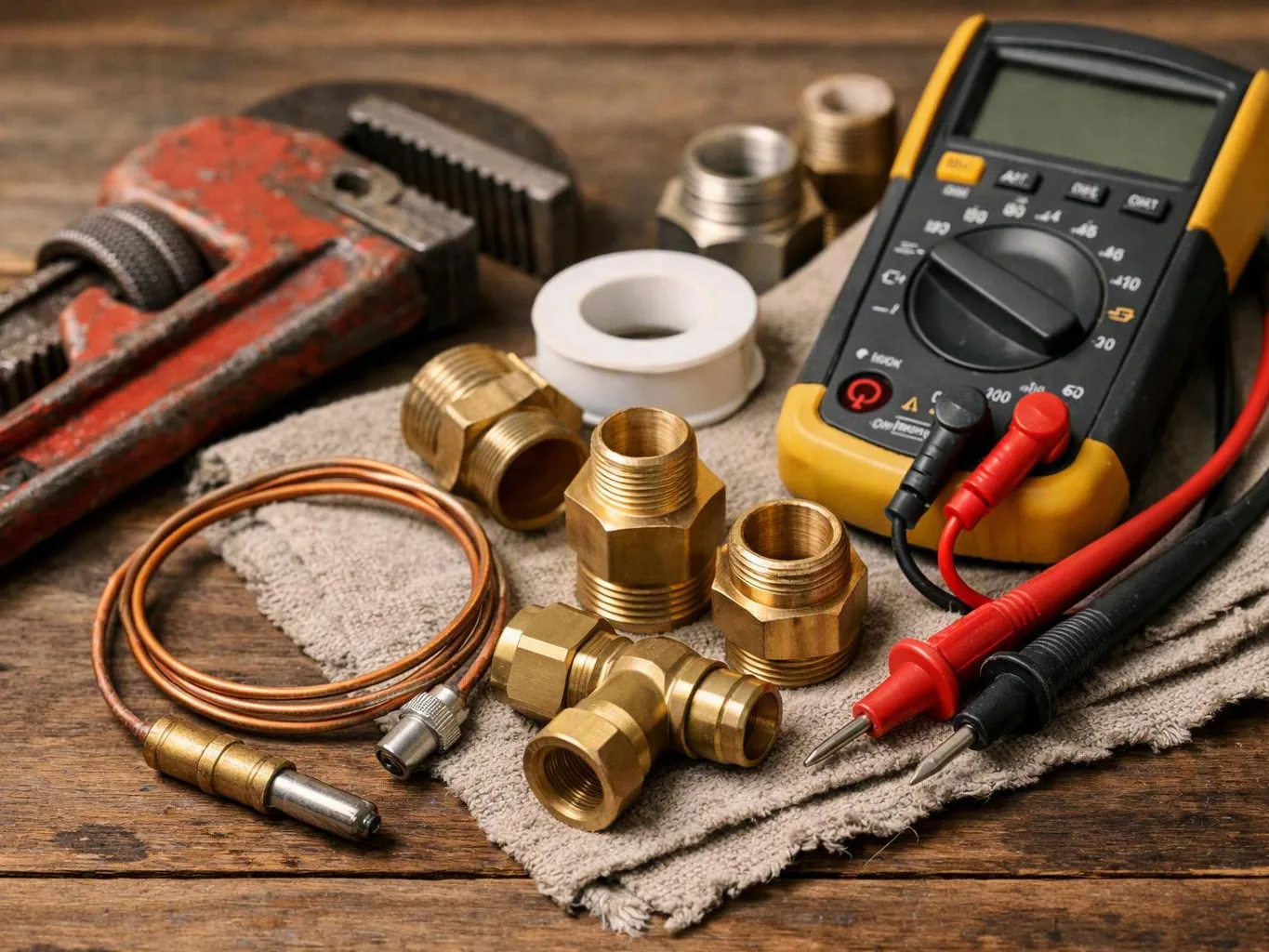
Backflow testing uses a calibrated test kit and controlled pressure readings to check each protection point. Our team follows manufacturer instructions and applicable code requirements during the process.
A test report records whether the assembly passed and identifies any condition that needs attention. We use the result to guide repair, replacement, or retesting.
What Happens If a Backflow Preventer Fails a Test?
A failed backflow test means the assembly needs evaluation, repair, or replacement before it can be relied on for protection.
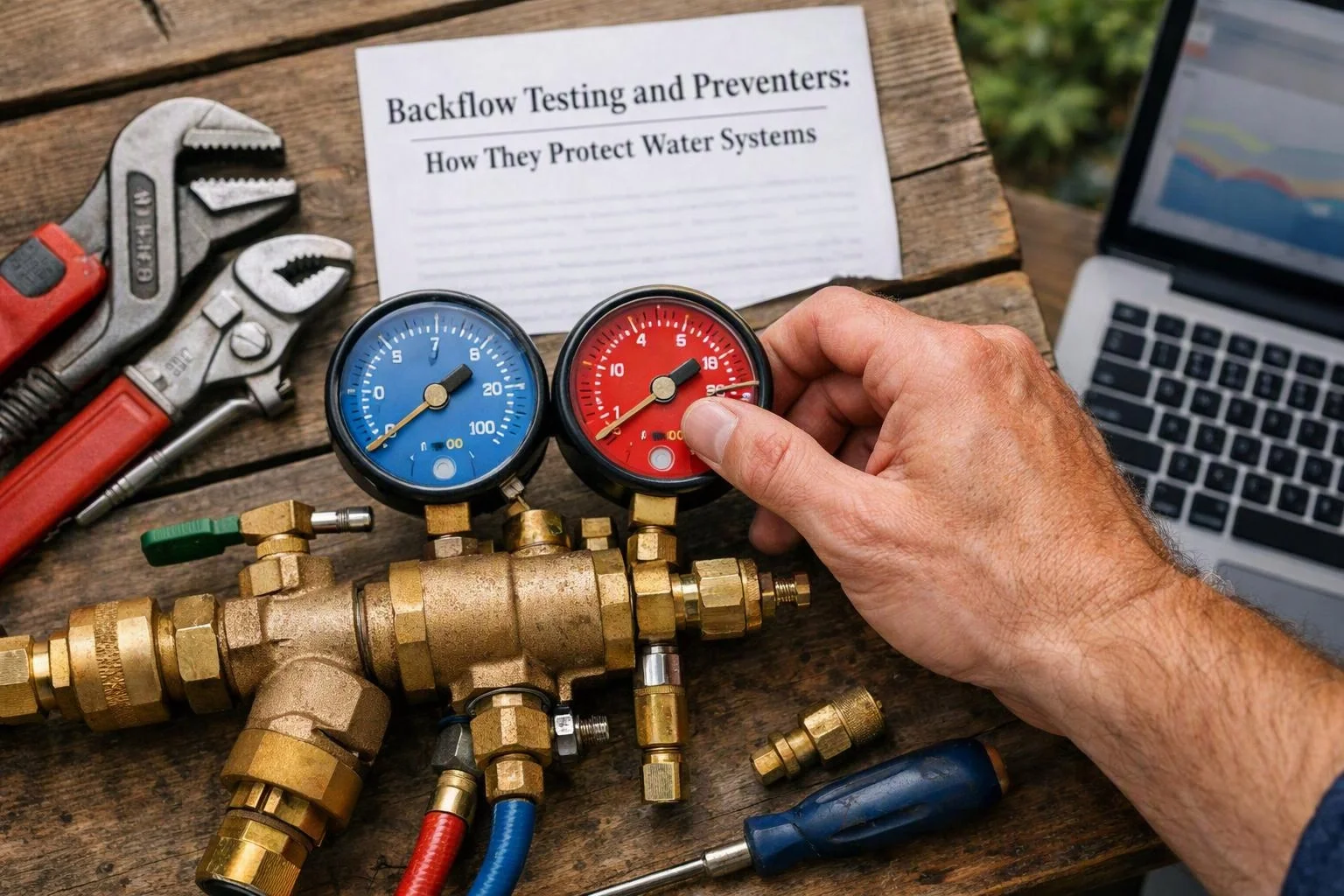
A check valve failure can allow reverse flow through the assembly. A relief valve failure can prevent proper pressure control.
Debris, corrosion, worn seals, and leaks can cause a failed result. Our team identifies the failed component and explains whether backflow preventer repair can restore safe operation.
Some assemblies need replacement when parts are damaged, unavailable, or unsuitable for the installation. The assembly must be retested after repair or replacement.
How We Approach Backflow Preventer Repair
Our team handles backflow preventer repair by connecting the test result to the condition of the complete assembly. We explain the service quote before repair work begins.
Our process keeps the decision focused on water system protection and the actual failed components. You can request a service quote that reflects access, parts, repair work, and retesting needs.
How Can You Recognize a Backflow Preventer Problem?
A backflow preventer problem may show through water discharge, a leaking valve, corrosion, or unusual water pressure.
Water discharge from a relief valve can point to pressure trouble or an internal fault. A damaged enclosure can expose the assembly to impact, weather, or tampering.
Corrosion and valve leakage can worsen over time. A sudden change in water pressure may also signal a problem with the assembly or the wider water system.
Cloudy water, unusual color, strange taste, or an unusual odor can be contamination warning signs. Stop using questionable water and contact PlumbingMaplevalley.com for guidance and inspection.
Who Can Test, Repair, or Replace a Backflow Assembly?
PlumbingMaplevalley.com can test backflow assemblies and handle backflow preventer repair when the device fails or shows damage.
Backflow testing requires the right test equipment, knowledge of the assembly, and accurate documentation. Testing requirements can vary by system type and applicable code requirements.
Repair requirements depend on the failed component and the manufacturer’s design. Replacement requirements can depend on damage, installation conditions, approved parts, and the level of protection needed.
Because backflow work protects potable water, hire a qualified plumbing service for testing, repair, and replacement. Our team can explain the test result and the next safe service step.
What Determines the Cost of Backflow Testing or Repair?
The cost depends on the assembly type, access, test condition, failed parts, and whether repair or replacement is needed.
Easy access can simplify testing and part replacement. Tight spaces, damaged enclosures, corrosion, and difficult drainage can add work to the service.
The test result also affects the service quote. A passing assembly may need testing only, while a failed assembly may need cleaning, parts, repair, retesting, or replacement.
We review the assembly and explain what the service quote includes before proceeding. Contact our team for an exact quote based on your backflow assembly and its condition.
Questions About Backflow Preventers and Testing
Can a backflow preventer leak without failing completely?
Yes, a backflow preventer can leak without showing a complete failure. Water discharge, valve leakage, or corrosion still deserves inspection because the assembly may not protect the clean supply correctly.
Can a backflow preventer be repaired instead of replaced?
Yes, a backflow preventer can be repaired when the assembly and its parts are suitable for repair. Our team checks the failed components, available replacement parts, and installation condition before recommending repair or replacement.
What should you do after a backflow test failure?
After a backflow test failure, arrange an inspection and avoid relying on the assembly until repair or replacement is complete. Our team can explain the failed test, complete the needed work, and retest the assembly.
Does every water connection need backflow protection?
Every water connection should be reviewed for cross-connection and contamination risk, but the required protection depends on the connection and hazard level. Our team can assess the installation and explain the applicable testing, repair, or replacement requirements.
Backflow protection depends on the correct assembly, accurate testing, and timely repair. Our team can review your test result and explain the next step.
Request a service quote for backflow testing, repair, or replacement.
Get a Free Estimate