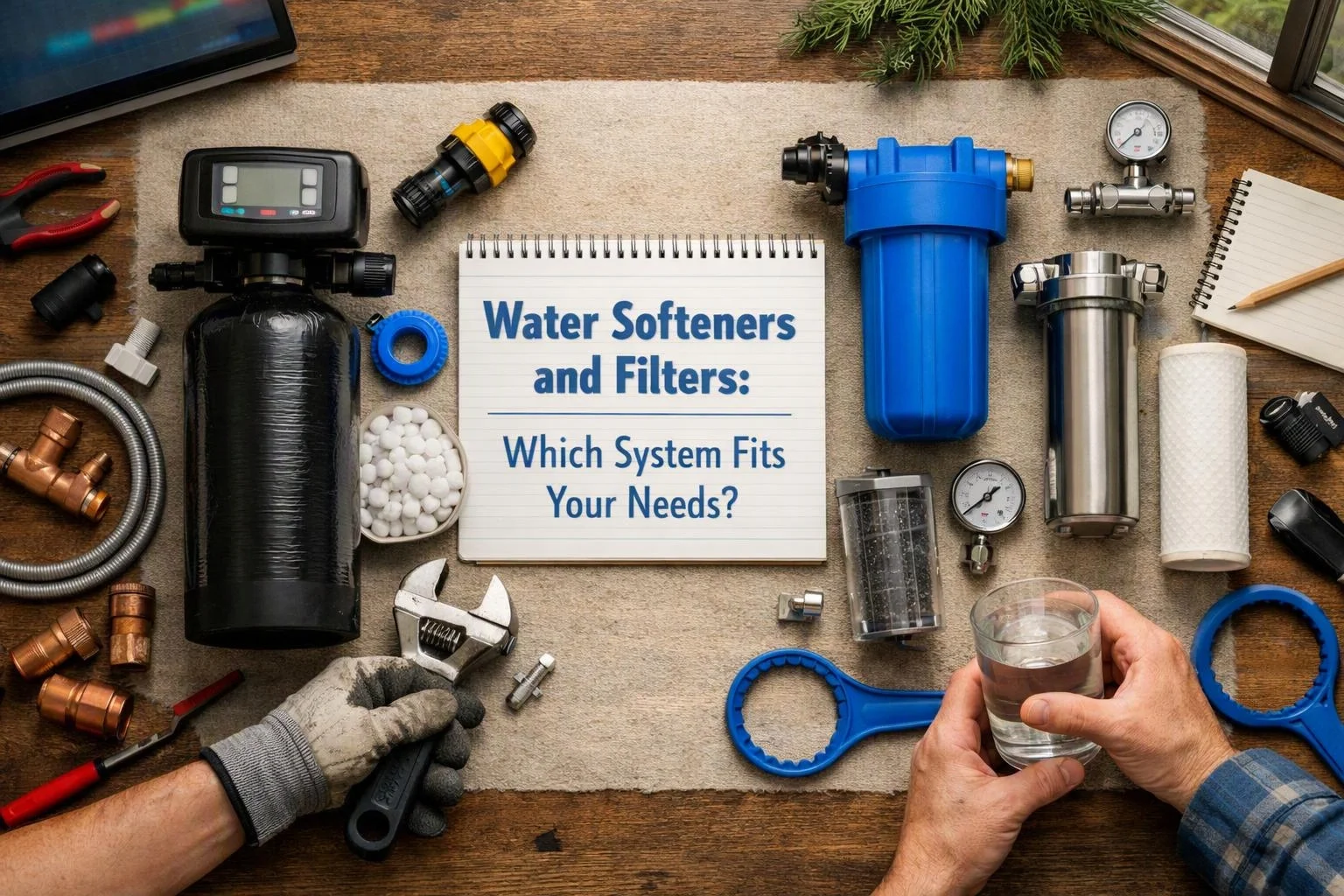
Water Softeners and Filters: Which System Fits Your Needs?
Water softeners reduce hardness and scale, while water filters target specific contaminants, odors, or taste. At PlumbingMaplevalley.com, we use your water concerns and test results to help choose one system or both.
Request an EstimateWhat Does a Water Softener Do?
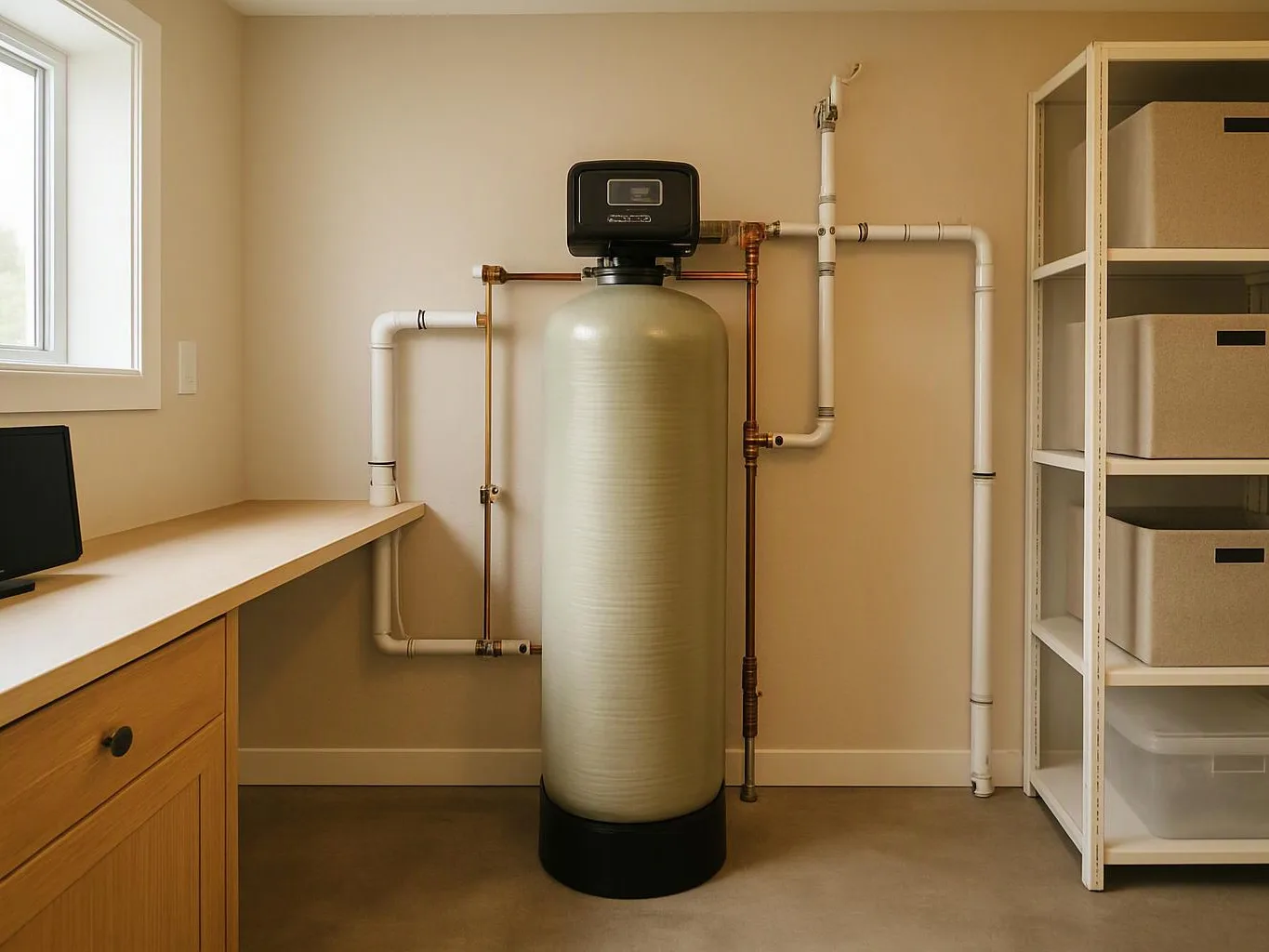
A water softener is a treatment system that reduces hard water minerals through ion exchange. Hard water contains calcium and magnesium, which can create scale buildup on fixtures and appliances.
A salt-based softener uses a resin tank to exchange hardness minerals for other ions. The process can reduce soap residue and help limit scale, but it doesn't remove every water contaminant.
What Does a Water Filter Do?
A water filter is a treatment system that removes or reduces selected particles, chemicals, or other contaminants. The correct filter depends on the water quality concern and the filter media.
A sediment filter helps with suspended particles. A carbon filter can reduce chlorine, taste, and odor in drinking water or throughout the home. Some systems target a narrower contaminant profile, so water testing helps guide the choice.
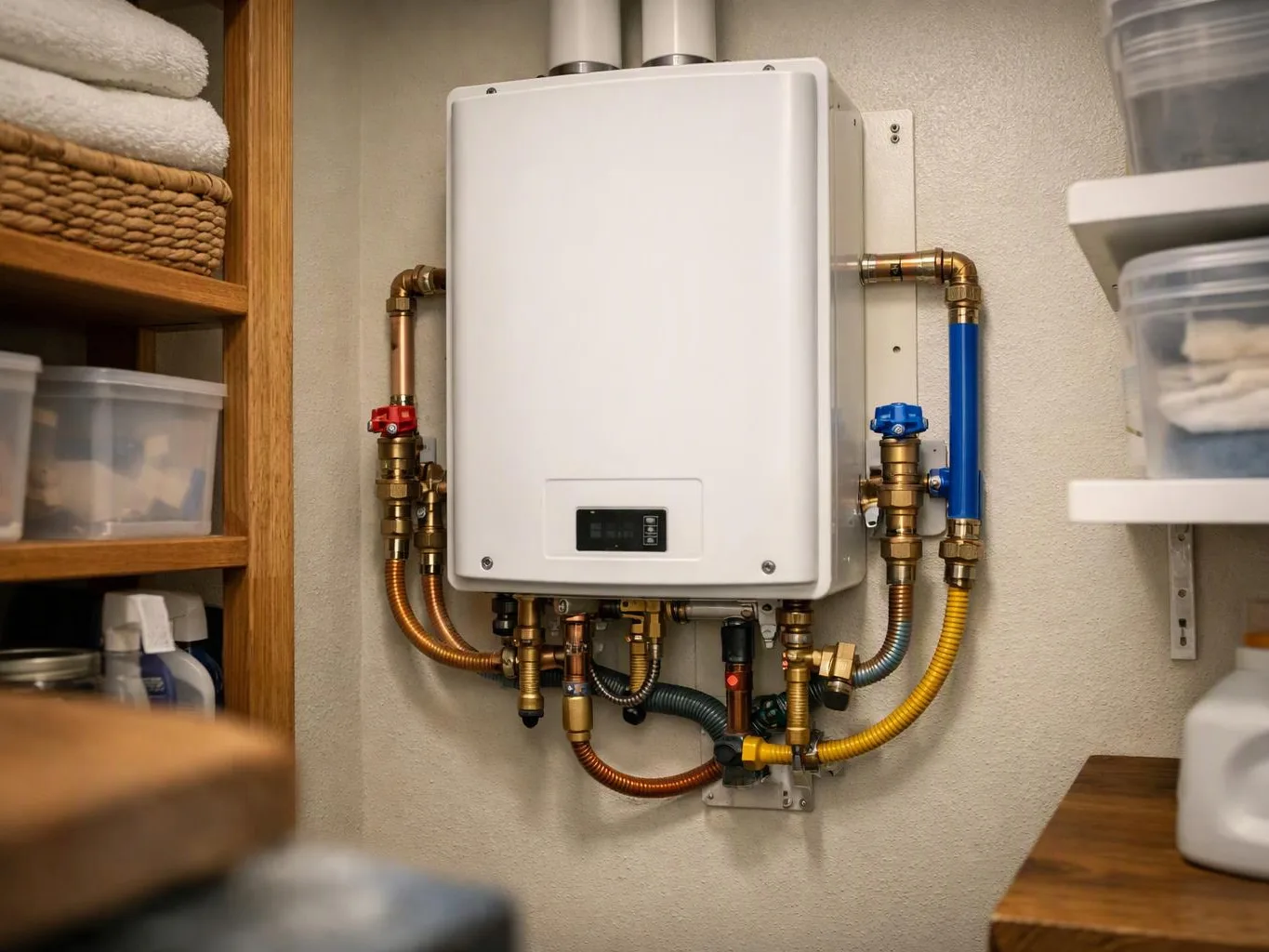
Our Water Filtration System Installation service can be planned around whole-home filtration or point-of-use filtration.
Water Softener vs Water Filter: Key Differences
A water softener treats hardness minerals, while a water filter treats selected particles, chemicals, or other contaminants.
| Water treatment system | Main purpose | Common targets | Maintenance focus |
|---|---|---|---|
| Water softener | Reduce water hardness | Calcium, magnesium, and scale-forming minerals | Salt, resin performance, control valve, and drain connection |
| Water filter | Reduce selected contaminants | Sediment, chlorine, taste, odor, or other tested concerns | Filter replacement, housing condition, and flow performance |
Scale control and drinking water quality are separate treatment goals. System maintenance also differs because softeners and filters use different components.
Does a Water Softener Filter Drinking Water?
No, a water softener isn't a general drinking-water filter because it targets hardness minerals rather than every contaminant.
A softener can condition potable water for household use, but filtration may still be needed for drinking-water treatment. We match filtration to the contaminant profile and the location where you want treated water.
Should You Test Your Water Before Choosing a System?
Yes, water testing helps identify the treatment problem before you choose equipment.
Testing can show the water hardness level and reveal concerns that differ between well water and municipal water. We use those results with your treatment goals to select suitable equipment and system sizing.
Water quality can change across homes, so taste or scale alone may not identify the full contaminant profile. Testing gives our team a clearer basis for equipment selection.
When Do You Need Both a Water Filter and a Softener?
Combined water treatment makes sense when hardness and a separate water quality concern affect the same home. The following conditions commonly support both systems.
The right combination depends on test results, household water use, and the treatment goals for each outlet. We avoid adding equipment that doesn't address a documented concern.
How Do a Water Filter and Softener Work Together?
A water filter and softener work together when each system handles a different part of the water treatment sequence.
A pre-filter can protect the softener from sediment. The softener can then reduce hardness, while a point-of-use filter can provide added drinking-water treatment.
Whole-house filtration may be paired with softening when the household wants treated water at several fixtures. We check water pressure, plumbing connections, drain needs, and system compatibility before installation.
What Order Should the Systems Follow?
System order depends on the water problem, but sediment filtration commonly comes before a water softener.
Our team confirms the sequence during the design review. Correct order supports equipment protection, water pressure, and system performance.
What Changes the Cost of Combining Both Systems?
The cost of combining systems depends on the water problem, equipment choices, plumbing changes, installation conditions, and maintenance needs; we explain those items in the quote.
Water testing, filtration capacity, water softener capacity, and installation location all affect the work. Existing plumbing connections, drain access, water pressure, and available service space also shape the installation plan.
Our quote scope identifies the selected water treatment equipment, planned plumbing work, system controls, and expected maintenance. We also explain filter replacement and softener care so you can plan ownership costs.
How We Match a Treatment System to Your Home
PlumbingMaplevalley.com matches treatment equipment to water quality, household use, and the home's plumbing conditions.
Which System Fits Your Water Problem?
Hard water and scale buildup usually point toward a water softener. Sediment, chlorine, taste, odor, or a tested contaminant concern points toward a water filter.
A combined system fits when the home has both hardness and a separate filtration need. We use water testing and plumbing inspection to choose between a salt-based softener, salt-free conditioner, carbon filter, whole-house filter, or point-of-use filter.
Contaminant reduction should match the test results and the intended water use. This approach avoids treating drinking water, bathing water, or the whole home with equipment that doesn't fit the problem.
How Can You Plan the Next Step?
Water filtration system installation or water softener installation should begin with water test results and a plumbing inspection.
We review equipment selection, system sizing, installation conditions, and maintenance before preparing the installation quote. Contact our team through our contact page to discuss the water problem and the treatment plan.